Which Fish Oil Benefits Hold Up?
See which omega-3 fish oil benefits survived large randomized trials, which ones failed outright, and what dose the evidence supports.
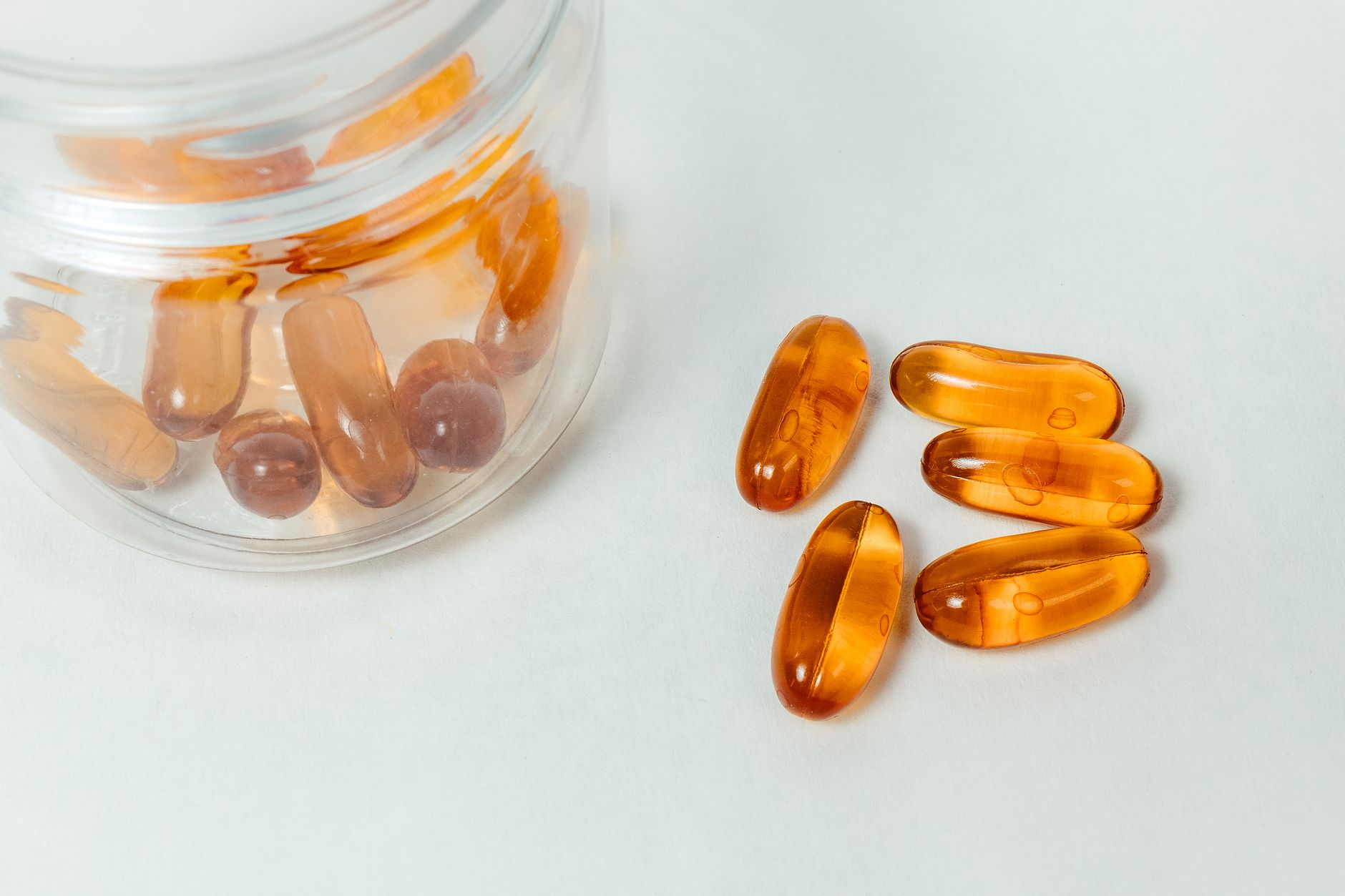
Most claims about omega-3 fish oil benefits trace back to one observation. People who eat a lot of fish have fewer heart attacks. That’s where the story starts, and for a good share of what’s printed on the bottle, it’s also where the evidence stops. Once researchers put the oil in a capsule and tested it against a placebo, the results split apart. A few benefits held. Several of the famous ones did not.
What did the big heart trials find?
The Cochrane review of omega-3 and cardiovascular disease pooled 86 randomized trials covering 162,796 people, at doses running from half a gram a day to more than five grams. Taking more long-chain omega-3s, meaning the EPA and DHA you get from fish, made little or no difference to dying of any cause or to cardiovascular events. Cochrane called both of those findings high certainty, which is the strongest grade it hands out. Stroke showed no effect either, at moderate certainty. Deaths from coronary heart disease dropped a little, but you’d have to put 334 people on supplements to prevent one of those deaths, and Cochrane rated that one low certainty.
VITAL, the biggest single test of an ordinary supplement dose, landed in the same place. Researchers gave 25,871 healthy older adults either 1 gram of fish oil a day or a placebo and followed them for a median of 5.3 years. Major cardiovascular events showed up in 386 people taking fish oil and 419 taking placebo, a gap small enough to be chance. Heart attacks on their own did drop, by 28%, but that was one of several secondary results rather than the question the trial was built to answer.
Two decades of confident advice rested on studies that watched what people ate. Watching is not testing. Fish eaters differ from non-fish eaters in income, weight, smoking, and whatever else is on the plate, and statistical adjustment never fully removes that.
Why does one trial keep getting cited?
REDUCE-IT is the outlier, and it’s the reason your cardiologist might still bring up fish oil. It enrolled 8,179 people who already had heart disease or diabetes, were on a statin, and still had high triglycerides. They got 4 grams a day of icosapent ethyl, a purified form of EPA sold as Vascepa, or a placebo. Major cardiovascular events hit 17.2% of the treatment group against 22.0% of the placebo group. Cardiovascular deaths ran 4.3% against 5.2%. The FDA approved the drug on that evidence, and its label now covers reducing heart attack and stroke risk in adults with triglycerides at or above 150 mg/dL who are on a statin and have established heart disease or diabetes plus two more risk factors.
Two things complicate that result. The trial was funded by Amarin, the company that makes the drug. And the placebo was mineral oil, which doesn’t look as inert as a placebo is supposed to be. In the placebo group, a review of the two trials’ differences notes that hs-CRP, a blood marker of inflammation, climbed from 2.1 mg/L to 2.8 mg/L over two years, roughly a third higher. If the comparison group quietly got worse, the gap between the groups looks bigger than the drug earned. The FDA reviewed that argument and concluded mineral oil was unlikely to account for the whole benefit.
Then came STRENGTH, which tested a similar idea and came up empty. It gave 13,078 statin-treated people at high cardiovascular risk 4 grams a day of a combined EPA and DHA formulation, with corn oil as the comparison. The primary endpoint hit 12.0% of the treated group and 12.2% of the corn oil group, and the trial was stopped early once a benefit stopped looking likely. Stomach side effects hit 24.7% of the treated group against 14.7% on corn oil.
So the strongest positive result used pure EPA and a questionable placebo, and the trial that fixed the placebo and added DHA came back with nothing. That’s an argument still going, not a settled benefit.
What does fish oil reliably do to triglycerides?
It lowers them, and this is the one effect nobody disputes. Triglycerides are the main form of fat moving around in your blood, and levels above 500 mg/dL raise the risk of pancreatitis, a painful inflammation of the pancreas. In the trial behind Vascepa’s original approval, people with triglycerides at or above 500 mg/dL took 4 grams a day of purified EPA and watched their median level fall 27% from a baseline of 680 mg/dL. The placebo group went up 10%.
Look at that dose, though. Four grams a day of purified EPA is a prescription, and the bottle on the shelf isn’t a low-dose version of it.
Where does the evidence run out?
Memory, mood, and dry eye are three of the most common reasons people reach for fish oil. All three have been tested in large trials, and the results below are what those trials found.
Memory and dementia
Cochrane looked at this twice and came up empty both times. In cognitively healthy older adults, reviewed in 2012, 3,536 people across three high-quality trials showed no difference in cognitive test scores, including in the trial that ran 40 months. In people who already have Alzheimer’s disease, reviewed in 2016, three trials covering 632 participants found no benefit to thinking, daily functioning, or dementia severity at six months. Cochrane graded most of those results high quality, which means more trials are unlikely to change the answer.
Depression
The Cochrane review on omega-3 for depression pooled 33 trials and 1,848 participants and found a small effect that probably isn’t real. The improvement worked out to about 2.5 points on a standard depression rating scale, and 3 points is the smallest change considered clinically meaningful. The reviewers rated the evidence very low certainty and said their own estimate looked biased toward a positive finding.
Dry eye
The DREAM trial tested 3,000 mg a day of EPA and DHA against an olive oil placebo in 535 people with moderate to severe dry eye. Symptom scores improved 13.9 points on fish oil and 12.5 points on placebo, a gap too small to be statistically significant. Tear production, tear film stability, and eye surface damage came out identical between the groups. Researchers confirmed people were taking the capsules by measuring omega-3 levels in their blood, so forgetfulness doesn’t explain the result.
What else holds up?
Two uses come through with real evidence behind them. Both apply to specific groups rather than to anyone hoping for a general health benefit, and both are worth knowing in detail.
Pregnancy. A Cochrane review of 70 trials covering 19,927 pregnant women found that omega-3 supplementation cut preterm birth before 37 weeks from 13.4% to 11.9% across 26 of those trials, and early preterm birth before 34 weeks from 4.6% to 2.7% across nine of them. Both results were graded high quality, and low birthweight fell as well. The tradeoff is that pregnancies running past 42 weeks rose from 1.6% to 2.6%. This is one to work out with an obstetrician who knows your history.
Rheumatoid arthritis. A meta-analysis of 42 trials of marine oil for arthritis pain found a small but real drop in pain among people with rheumatoid arthritis, an autoimmune disease that inflames the joints. That evidence was moderate. In osteoarthritis, the wear-and-tear kind, there was no effect at all. So if you’re taking fish oil for creaky knees, you’re taking it for the wrong kind of arthritis.
What about the atrial fibrillation risk?
Higher doses raise it. Atrial fibrillation is an irregular, often fast heart rhythm that raises stroke risk. A meta-analysis of seven cardiovascular trials covering 81,210 people found a 25% higher risk of it among people taking marine omega-3s, and the risk tracked the dose. Trials above 1 gram a day showed a 49% increase, trials at or below 1 gram a day showed a 12% increase, and every extra gram per day added about 11%.
The signal is strong enough to end up printed on a drug label. Vascepa’s label warns that atrial fibrillation or flutter requiring hospitalization hit 3% of patients on the drug against 2% on placebo, and that bleeding events hit 12% against 10%.
At ordinary doses the picture is less alarming. Inside that same analysis, VITAL, the largest trial testing 1 gram a day, showed a 9% difference small enough to be chance. And an updated meta-analysis of 34 trials covering 114,326 people found the risk concentrated in one group, people already at high cardiovascular risk taking more than 1,500 mg a day, where the absolute increase was 0.8%. That paper is a preprint and hasn’t been peer reviewed, so treat it as a refinement still in progress.
How much EPA and DHA is in your capsule?
Less than the number on the front. One widely sold 1,000 mg softgel lists 300 mg of EPA and 200 mg of DHA, which means half the capsule is other fats. Getting to the 4 grams used in the prescription trials would take about eight of those softgels a day, and even then it wouldn’t be the pure EPA that REDUCE-IT tested. Matching the dose and the form that was studied is the supplement problem that keeps coming back, the same one that decides whether collagen does anything for your skin or your joints.
The other option is food. The American Heart Association’s advisory on seafood and heart disease recommends one to two seafood meals a week to lower the risk of heart failure, coronary heart disease, ischemic stroke, and sudden cardiac death, particularly when the fish takes the place of something less healthy. That advice rests on the same observational evidence the capsule trials failed to confirm, with one difference. Swapping salmon in for a burger changes more than your omega-3 level.
Questions people ask about fish oil
Should you take it if your triglycerides are normal?
The evidence doesn’t support it for heart protection. Cochrane rated the finding of little or no effect on cardiovascular events as high certainty, and VITAL tested this exact population and came back neutral. The benefit that survives is a triglyceride effect, and there’s nothing there to lower.
Is more better?
Not outside a prescription. The clearest dose-response in the trials is the atrial fibrillation one, where risk climbed about 11% per extra gram per day.
Can you take it alongside a blood thinner?
Ask whoever prescribed the blood thinner. Vascepa’s label records bleeding events in 12% of patients on the drug versus 10% on placebo, which is why bleeding sits in the warnings section instead of a footnote. Dose matters here, so have that conversation before you start.
Where that leaves the bottle in your cabinet
Fish oil is one of the most-studied supplements there is, and the studying mostly went badly for it. The heart-protection claim that sold it collapsed under high-certainty evidence, and the memory, dry eye, and mood claims went down with it. A big pile of research doesn’t always end that way. Creatine has a comparable pile of trials behind it and a far cleaner record. What’s left standing for fish oil is narrower. It lowers triglycerides at prescription strength, it lowers preterm birth risk in pregnancy, and it takes the edge off rheumatoid arthritis pain.
If you have high triglycerides, established heart disease, rheumatoid arthritis, or a pregnancy to manage, take it to a doctor who can look at your numbers and your other medications. For everyone else, the fish itself is the better-supported option, and it doesn’t come with an atrial fibrillation warning.